

CEFR B1
What you will learn
- Choose whether the reporting frame is current or past before changing the subordinate tense.
- Use imperfect for a simultaneous state and pluperfect for an event anterior to a past report.
- Adjust person, possessive, time, place and demonstratives only when the new reporting situation changes their reference.
Before you start
- Have studied “The imperfect and pluperfect subjunctive: distance, sequence and unreal frames”.
- Have studied “The imperfect: build the background of a past scene”.
- Have studied “The present perfect: a past event connected to now”.
- Have studied “Future choices and conditional wishes”.
The idea
Direct speech preserves the original speaker's words. Reported speech rebuilds the message from a new speaker, place and time: dice que for a current report, dijo que for a past reporting frame. A change is justified only when the viewpoint changes. If the information, place or day is still current, Spanish can retain a present form or deictic word instead of shifting it mechanically.
With a current reporting frame, the original tense can normally remain. With a later past frame, an original present state commonly moves to the imperfect, while an earlier completed event can move to the pluperfect to preserve its anterior relation.
Pronouns, possessives and words such as hoy, mañana, aquí or este change only when their speaker, time, place or referent has changed. Backshift is a viewpoint operation, not a mechanical replacement of every visible form.
Complete current and past reporting pattern for B1 statements
| original relation | current report | later past report | meaning |
|---|---|---|---|
| present state | dice que + present | dijo que + imperfect | simultaneous with each reporting point |
| present perfect event | dice que + perfect | dijo que + pluperfect | event anterior to the report |
| preterite event | dice que + preterite | dijo que + pluperfect | completed event anterior to a past report |
| stable fact still asserted | dice que + present | dijo que + present can remain | backshift is not compulsory when truth remains current |
Complete imperfect paradigm for a simultaneous reported state
| person | comer |
|---|---|
| yo | comía |
| tú | comías |
| él / ella / usted | comía |
| nosotros / nosotras | comíamos |
| vosotros / vosotras | comíais |
| ellos / ellas / ustedes | comían |
Complete pluperfect paradigm for an earlier event
| person | haber | vivir |
|---|---|---|
| yo | había | había vivido |
| tú | habías | habías vivido |
| él / ella / usted | había | había vivido |
| nosotros / nosotras | habíamos | habíamos vivido |
| vosotros / vosotras | habíais | habíais vivido |
| ellos / ellas / ustedes | habían | habían vivido |
Reference words move only when their referent moves
| direct reference | possible later report | condition |
|---|---|---|
| hoy | ese día | the report occurs on a different day |
| mañana | al día siguiente | the original tomorrow is no longer tomorrow |
| ayer | el día anterior | the original yesterday needs a new anchor |
| aquí | allí | the reporter is now in a different place |
| este / esta | ese / esa or aquel / aquella | distance and discourse reference have changed |
| mi / nuestro | su or a named possessor | the possessor is no longer the current speaker |
How it sounds
- Nora dice que la tienda abre a las nueve. / Nora dijo que la tienda abre a las nueve todos los días.At 10:05, the reporting frame is current and the schedule is still valid. The following week, the schedule can still be presented as a stable fact. A past form is possible if the reporter frames the information as belonging to the earlier conversation, but it is not forced by a mechanical rule.
Check objective 1Another case
Which reporting frame normally triggers past-time backshift in this lesson?
Which reporting frame is current and therefore does not by itself require past backshift?
Answer available without interaction
Answer: Clara dijo que... — The past reporting frame dijo establishes the reference point for backshift.
The past reporting frame dijo establishes the reference point for backshift.
Answer: Pablo cuenta que... — The present reporting frame cuenta is current; tense choice follows the current relation.
The present reporting frame cuenta is current; tense choice follows the current relation.
Check objective 2Another case
A proposed answer is “trabajaría” for this case: “Use the office state. Today, from a different place, report only the work state simultaneous with Clara's words yesterday, without asserting that it is still true: “Trabajo aquí.” → Clara dijo que trabajaría allí. (trabajar)”. Choose the only valid form.
A proposed answer is “había trabajado” for this case: “Use the office state. Today, from a different place, report only the work state simultaneous with Clara's words yesterday, without asserting that it is still true: “Trabajo aquí.” → Clara dijo que había trabajado allí. (trabajar)”. Choose the only valid form.
Answer available without interaction
Answer: trabajaba — The task asks for the work state simultaneous with Clara's past words, so present trabajo becomes imperfect trabajaba. The report is made from a different place, so aquí becomes allí.
The task asks for the work state simultaneous with Clara's past words, so present trabajo becomes imperfect trabajaba. The report is made from a different place, so aquí becomes allí.
Answer: trabajaba — The task asks for the work state simultaneous with Clara's past words, so present trabajo becomes imperfect trabajaba. The report is made from a different place, so aquí becomes allí.
The task asks for the work state simultaneous with Clara's past words, so present trabajo becomes imperfect trabajaba. The report is made from a different place, so aquí becomes allí.
Check objective 3Another case
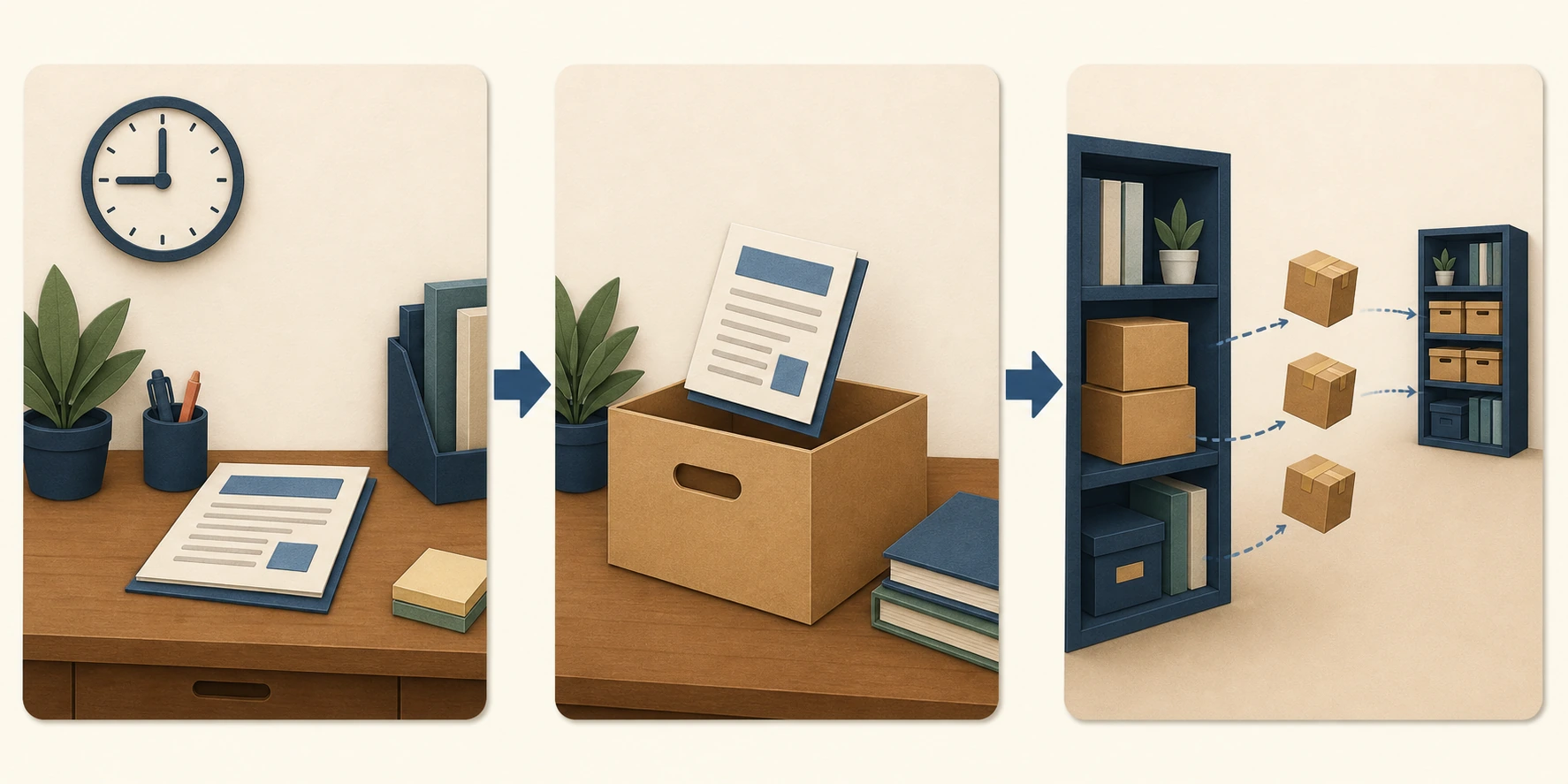
A proposed answer is “tiene” for this case: “Use the three parcels and the move to the distant shelf. Report only the state simultaneous with Laura's remark yesterday, from a different place today: “Tengo tres paquetes aquí.” → Laura dijo que tiene tres paquetes allí.”. Choose the only valid form.
A proposed answer is “tuvo” for this case: “Use the three parcels and the move to the distant shelf. Report only the state simultaneous with Laura's remark yesterday, from a different place today: “Tengo tres paquetes aquí.” → Laura dijo que tuvo tres paquetes allí.”. Choose the only valid form.
Answer available without interaction
Answer: tenía — The task explicitly asks for the possession state simultaneous with Laura's past words, so tengo becomes tenía. The report is made from a different place, which justifies allí.
The task explicitly asks for the possession state simultaneous with Laura's past words, so tengo becomes tenía. The report is made from a different place, which justifies allí.
Answer: tenía — The task explicitly asks for the possession state simultaneous with Laura's past words, so tengo becomes tenía. The report is made from a different place, which justifies allí.
The task explicitly asks for the possession state simultaneous with Laura's past words, so tengo becomes tenía. The report is made from a different place, which justifies allí.
What your own language pushes you to say
Wrong A week later: Marta dijo que estaba aquí mañana.
Right A week later and from another place: Marta dijo que estaba allí al día siguiente.
The example states that both time and place changed. The deictic words must therefore move with the reporting viewpoint.
Challenge: apply every rule
Solve every case and justify each choice: 1) Which reporting frame normally triggers past-time backshift in this lesson? 2) A proposed answer is “había terminado” for this case: “Use the office state. Today, from a different place, report only the work state simultaneous with Clara's words yesterday, without asserting that it is still true: “Trabajo aquí.” → Clara dijo que había terminado allí. (trabajar)”. Choose the only valid form. 3) A proposed answer is “tiene” for this case: “Use the three parcels and the move to the distant shelf. Report only the state simultaneous with Laura's remark yesterday, from a different place today: “Tengo tres paquetes aquí.” → Laura dijo que tiene tres paquetes allí.”. Choose the only valid form.
Answer available without interaction
- Choose whether the reporting frame is current or past before changing the subordinate tense.
- Use imperfect for a simultaneous state and pluperfect for an event anterior to a past report.
- Adjust person, possessive, time, place and demonstratives only when the new reporting situation changes their reference.
Answer: Clara dijo que... · trabajaba · tenía
The past reporting frame dijo establishes the reference point for backshift. The task asks for the work state simultaneous with Clara's past words, so present trabajo becomes imperfect trabajaba. The report is made from a different place, so aquí becomes allí. The task explicitly asks for the possession state simultaneous with Laura's past words, so tengo becomes tenía. The report is made from a different place, which justifies allí.
Curriculum alignment and sources
- B1 learners can produce connected accounts of experiences and give the main points of familiar information; reporting another speaker is an editorial grammar support for that capacity. · CEFR descriptors search
- The B1 column explicitly lists imperfect in indirect speech with verbs of communication, perception and thought, plus pluperfect anteriority. Future-to-conditional and past reported commands are B2-linked and excluded here. · ic-pcic-grammar-b1-b2