

CEFR B1
What you will learn
- Choose a command form by addressee, number, formality and regional system.
- Contrast affirmative tú/vosotros commands with negative commands formed from the subjunctive.
- Attach clitics to affirmative commands and place them before negative commands with required accents.
Before you start
- Have studied “The present subjunctive: build the form before choosing the mood”.
- Have studied “Object pronouns: track the thing and the recipient”.
The idea
Imperatives address tú, usted, nosotros, vosotros or ustedes. Spanish does not have a first-person singular command because a speaker cannot issue a command to yo as a separate addressee. Before conjugating, fix three variables: who receives the instruction, whether it is affirmative or negative, and which plural address system the context uses.
All negative commands use the present subjunctive: no comas, no hable, no salgáis, no vayan. That is why an irregular short affirmative such as haz switches to no hagas.
Usted and ustedes already use subjunctive-shaped forms in the affirmative, so polarity changes the position of no and any pronouns, not the verb paradigm.
Complete regular command system
| addressee | hablar + | hablar − | comer + | comer − | vivir + | vivir − |
|---|---|---|---|---|---|---|
| tú | habla | no hables | come | no comas | vive | no vivas |
| usted | hable | no hable | coma | no coma | viva | no viva |
| nosotros / nosotras | hablemos | no hablemos | comamos | no comamos | vivamos | no vivamos |
| vosotros / vosotras | hablad | no habléis | comed | no comáis | vivid | no viváis |
| ustedes | hablen | no hablen | coman | no coman | vivan | no vivan |
Eight irregular affirmative tú commands
| infinitive | affirmative tú | negative tú follows the subjunctive |
|---|---|---|
| decir | di | no digas |
| hacer | haz | no hagas |
| ir | ve | no vayas |
| poner | pon | no pongas |
| salir | sal | no salgas |
| ser | sé | no seas |
| tener | ten | no tengas |
| venir | ven | no vengas |
Pronoun placement and written accents
| environment | placement | model |
|---|---|---|
| affirmative | attach pronouns to the command | Explícamelo. |
| negative | place pronouns before the verb | No me lo expliques. |
| affirmative reflexive vosotros | drop final d before os | Sentaos. |
| accent | add an accent when attachment shifts stress | Escríbelo. / Dígamelo. |
How it sounds
- Leed el primer párrafo. / Lean el primer párrafo.In most of Spain, familiar plural selects vosotros. In most of Spanish America, familiar plural selects ustedes. The lexical instruction stays the same while the address paradigm changes.
Check objective 1Another case
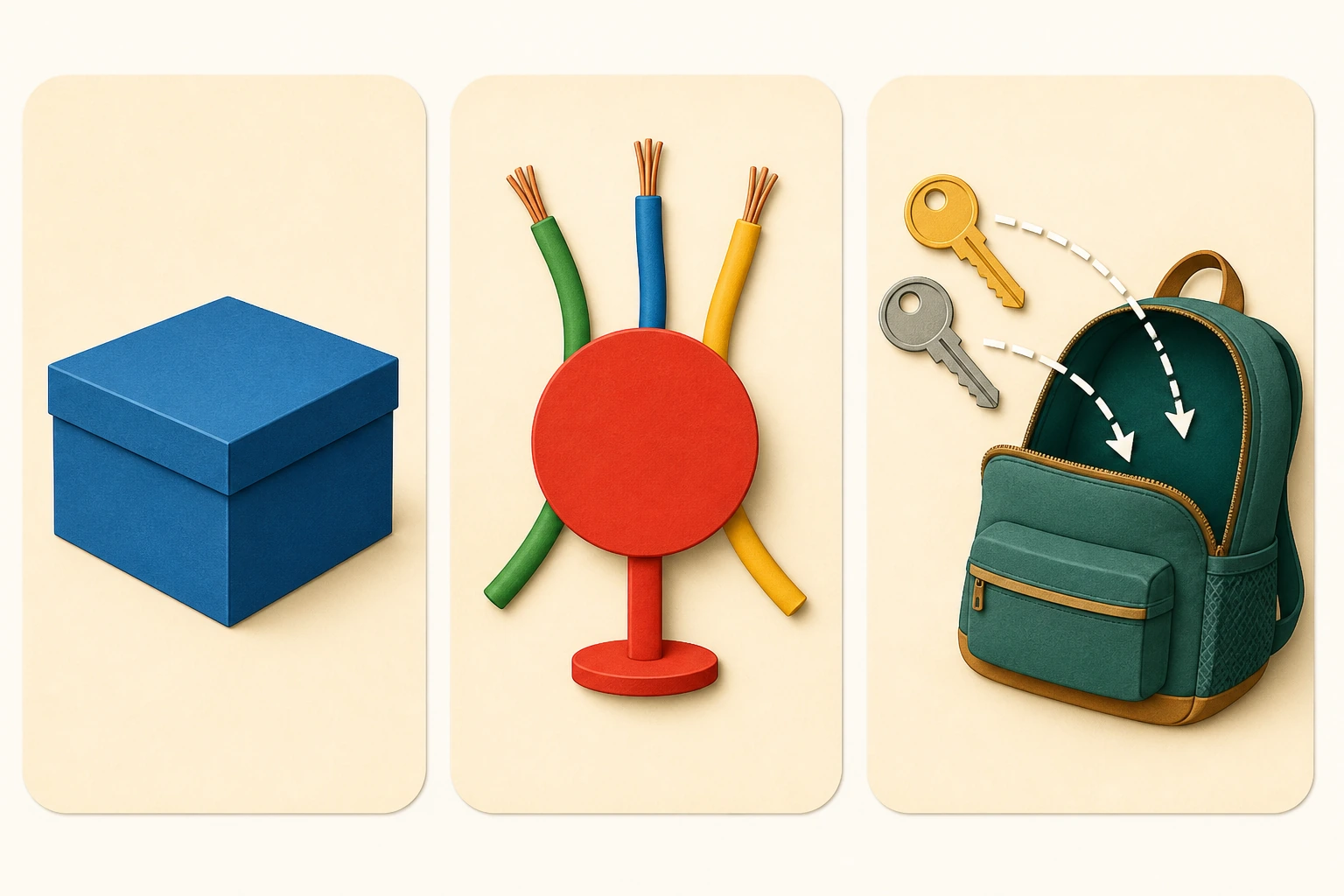
A proposed answer is “Guarda” for this case: “In the Spain vosotros system, use the two keys. Guarda las dos llaves en la mochila. (guardar, affirmative)”. Choose the only valid form.
A proposed answer is “Guardar” for this case: “In the Spain vosotros system, use the two keys. Guardar las dos llaves en la mochila. (guardar, affirmative)”. Choose the only valid form.
Answer available without interaction
Answer: Guardad — Affirmative vosotros replaces the infinitive -r with -d: guardar becomes guardad. The regional system is stated explicitly.
Affirmative vosotros replaces the infinitive -r with -d: guardar becomes guardad. The regional system is stated explicitly.
Answer: Guardad — Affirmative vosotros replaces the infinitive -r with -d: guardar becomes guardad. The regional system is stated explicitly.
Affirmative vosotros replaces the infinitive -r with -d: guardar becomes guardad. The regional system is stated explicitly.
Check objective 2Another case
A proposed answer is “Abres” for this case: “Use the sealed blue box. Abres la caja azul. (abrir, tú, affirmative)”. Choose the only valid form.
A proposed answer is “Abras” for this case: “Use the sealed blue box. Abras la caja azul. (abrir, tú, affirmative)”. Choose the only valid form.
Answer available without interaction
Answer: Abre — Affirmative tú uses the third-person present form of abrir: abre.
Affirmative tú uses the third-person present form of abrir: abre.
Answer: Abre — Affirmative tú uses the third-person present form of abrir: abre.
Affirmative tú uses the third-person present form of abrir: abre.
Check objective 3Another case
Attach lo to the affirmative tú command of guardar.
Place la in the negative tú command of abrir.
Answer available without interaction
Answer: Guárdalo. — An affirmative command attaches the clitic and adds the written accent required by stress.
An affirmative command attaches the clitic and adds the written accent required by stress.
Answer: No la abras. — A negative command places the clitic before the subjunctive command form.
A negative command places the clitic before the subjunctive command form.
What your own language pushes you to say
Wrong No haz ruido y no ven tarde.
Right No hagas ruido y no vengas tarde.
Negative tú commands use present-subjunctive forms, including irregular stems.
Challenge: apply every rule
Solve every case and justify each choice: 1) A proposed answer is “Abre” for this case: “In the Spain vosotros system, use the two keys. Abre las dos llaves en la mochila. (guardar, affirmative)”. Choose the only valid form. 2) A proposed answer is “toquen” for this case: “Use the sealed blue box. toquen la caja azul. (abrir, tú, affirmative)”. Choose the only valid form. 3) Attach lo to the affirmative tú command of guardar.
Answer available without interaction
- Choose a command form by addressee, number, formality and regional system.
- Contrast affirmative tú/vosotros commands with negative commands formed from the subjunctive.
- Attach clitics to affirmative commands and place them before negative commands with required accents.
Answer: Guardad · Abre · Guárdalo.
Affirmative vosotros replaces the infinitive -r with -d: guardar becomes guardad. The regional system is stated explicitly. Affirmative tú uses the third-person present form of abrir: abre. An affirmative command attaches the clitic and adds the written accent required by stress.
Curriculum alignment and sources
- B1 interaction includes handling familiar practical situations, giving reasons and responding to everyday instructions; the form sequence is editorial. · CEFR descriptors search
- The B1 imperative inventory includes enclitic pronouns, negative commands with present subjunctive and values of request, permission and instruction; the functions inventory gives direct and attenuated instructions. · ic-pcic-grammar-b1-b2
Continue along this corridor
Practise this: Giving orders, and being polite about itThe present subjunctive: build the form before choosing the moodObject pronouns: track the thing and the recipientReal si-clauses: conditions the speaker still treats as possible