

CEFR A1
What you will learn
- Use high-frequency present forms of ir, tener and querer in concrete A1 messages.
- Read the complete paradigms of five essential irregular verbs without treating them as one regular rule.
- Distinguish A1 communicative chunks from the broader stem-change system that the PCIC develops at A2.
Before you start
- Have studied “The present tense: three endings to start speaking”.
The idea
At A1, a few irregular forms carry essential messages: “voy” for movement, “tengo” for possession and age, “quiero” for wants, “puedo” for ability, and “hago” for activities. They are useful before a learner can control every irregularity in Spanish. The PCIC places the broad system of common vowel and consonant irregularities in A2. This page therefore assesses concrete A1 uses, while the complete tables are a reference that prevents partial or misleading paradigms.
In “querer” and “tener”, stressed e becomes ie in the singular rows and in the third-person plural: “quiero”, “tienes”, “quieren”. In “poder”, stressed o becomes ue: “puedo”, “puedes”, “pueden”. Nosotros and vosotros keep the unchanged stem because stress falls on the ending.
The yo forms “tengo” and “hago” also have their own consonantal change. The table records the complete facts; A1 practice below uses only high-frequency messages and does not pretend that one page completes the A2 irregular system.
Ir: complete present paradigm
| person | ir |
|---|---|
| yo | voy |
| tú | vas |
| él / ella / usted | va |
| nosotros / nosotras | vamos |
| vosotros / vosotras | vais |
| ellos / ellas / ustedes | van |
High-frequency reference paradigms
| person | tener | querer | poder | hacer |
|---|---|---|---|---|
| yo | tengo | quiero | puedo | hago |
| tú | tienes | quieres | puedes | haces |
| él / ella / usted | tiene | quiere | puede | hace |
| nosotros / nosotras | tenemos | queremos | podemos | hacemos |
| vosotros / vosotras | tenéis | queréis | podéis | hacéis |
| ellos / ellas / ustedes | tienen | quieren | pueden | hacen |
How it sounds
- Marta tiene un billete y quiere ir al centro.Marta is third-person singular. The third-person singular of tener is “tiene”. The third-person singular of querer is “quiere”. After conjugated querer, the action remains an infinitive: “ir”.
Check objective 1Another case
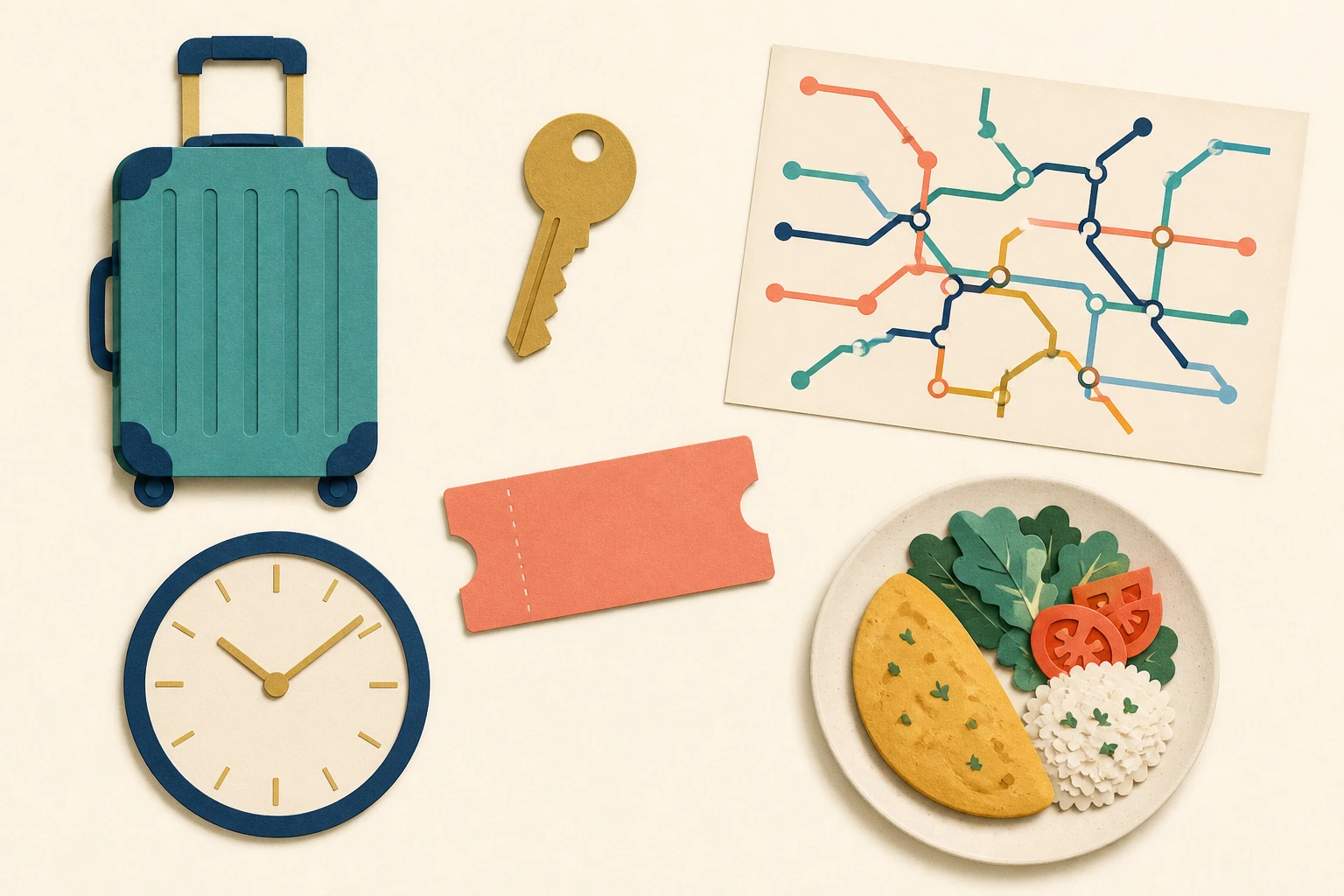
A proposed answer is “teno” for this case: “Use the key and ticket in the image: Yo teno la llave y el billete. (tener)”. Choose the only valid form.
A proposed answer is “tienes” for this case: “Use the key and ticket in the image: Yo tienes la llave y el billete. (tener)”. Choose the only valid form.
Answer available without interaction
Answer: tengo — The high-frequency yo form of tener is tengo.
The high-frequency yo form of tener is tengo.
Answer: tengo — The high-frequency yo form of tener is tengo.
The high-frequency yo form of tener is tengo.
Check objective 2Another case
A proposed answer is “imos” for this case: “Use the transit map: Esta tarde nosotros imos al centro en metro. (ir)”. Choose the only valid form.
A proposed answer is “van” for this case: “Use the transit map: Esta tarde nosotros van al centro en metro. (ir)”. Choose the only valid form.
Answer available without interaction
Answer: vamos — The nosotros form of ir is vamos.
The nosotros form of ir is vamos.
Answer: vamos — The nosotros form of ir is vamos.
The nosotros form of ir is vamos.
Check objective 3Another case
Which item belongs to the broader A2 stem-change system rather than the three A1 chunks practised here?
Which option is one of the concrete A1 communicative chunks taught in this lesson?
Answer available without interaction
Answer: ellos prefieren — Prefieren illustrates the broader e-to-ie stem-change system deferred to A2 in this package.
Prefieren illustrates the broader e-to-ie stem-change system deferred to A2 in this package.
Answer: yo quiero — Yo quiero is one of the high-frequency A1 chunks explicitly taught here.
Yo quiero is one of the high-frequency A1 chunks explicitly taught here.
What your own language pushes you to say
Wrong Yo quero ir, pero no podo hoy.
Right Quiero ir, pero no puedo hoy.
The stressed stems of querer and poder change in the yo form. These are stored high-frequency forms at A1 and part of a wider pattern developed later.
Challenge: apply every rule
Solve every case and justify each choice: 1) A proposed answer is “vamos” for this case: “Use the key and ticket in the image: Yo vamos la llave y el billete. (tener)”. Choose the only valid form. 2) A proposed answer is “tengo” for this case: “Use the transit map: Esta tarde nosotros tengo al centro en metro. (ir)”. Choose the only valid form. 3) Which item belongs to the broader A2 stem-change system rather than the three A1 chunks practised here?
Answer available without interaction
- Use high-frequency present forms of ir, tener and querer in concrete A1 messages.
- Read the complete paradigms of five essential irregular verbs without treating them as one regular rule.
- Distinguish A1 communicative chunks from the broader stem-change system that the PCIC develops at A2.
Answer: tengo · vamos · ellos prefieren
The high-frequency yo form of tener is tengo. The nosotros form of ir is vamos. Prefieren illustrates the broader e-to-ie stem-change system deferred to A2 in this package.
Curriculum alignment and sources
- A1 explicitly includes the own irregularities of ser, estar, haber and ir. The general inventory of frequent vowel and consonant irregularities appears in A2. · Plan Curricular del Instituto Cervantes: Gramática, inventario A1-A2
- A1 communicative exponents include forms such as quiero plus noun or infinitive and basic statements of personal needs; retaining selected high-frequency forms is a functional synthesis. · ic-pcic-a1-a2-funciones
- Complete paradigms of tener, querer, poder and hacer are supplied as a graduated reference. Mastery of the wider stem-changing and consonantal system is not claimed as an official A1 requirement. · Plan Curricular del Instituto Cervantes: Gramática, inventario A1-A2
Continue along this corridor
Practise this: “Quiero”, “puedo”, “duermo”: verbs that change insidePractise this: “Tengo 20 años”, “hace frío”Practise this: “Tú” or “usted”: one English “you”, two Spanish onesThe present tense: three endings to start speakingOne English “to be”, three Spanish choicesMe gusta: the sentence turns round