

CEFR B2
What you will learn
- Place a subject after the verb when it supplies the requested or newly introduced information.
- Resume a fronted direct or indirect object with the required unstressed pronoun.
- Build cleft structures that focus a person, place, time or element.
Before you start
- Have studied “The present tense: three endings to start speaking”.
- Have studied “Object pronouns: track the thing and the recipient”.
The idea
A neutral subject–verb order is possible in many contexts, but speakers reorganise constituents to connect with what is already active and to place new or contrastive information where it carries focus. Word order is therefore not free. A fronted object can require a clitic, and a postverbal subject answers a different discourse question from a preverbal topic.
In “Ese libro, lo compré ayer”, ese libro is a detached topic and the clause contains lo. In a narrow contrast such as “ESE libro compré, no el otro”, pronunciation and register can license a different marked structure, but it should not erase the productive B2 rule for topicalisation.
Teach the stable topic pattern first: fronted object, pause in speech or comma in writing, and a matching clitic.
Fronted objects and their resumptive clitics
| fronted constituent | required clitic | model |
|---|---|---|
| masculine singular direct object | lo | Ese contrato, lo revisó Alba. |
| feminine singular direct object | la | Esa factura, la revisó Alba. |
| masculine plural direct object | los | Esos contratos, los revisó Alba. |
| feminine plural direct object | las | Esas facturas, las revisó Alba. |
| singular indirect object | le | A Julia, le enviaron la copia. |
| plural indirect object | les | A los socios, les enviaron la copia. |
Clefts focus one constituent
| focused category | pattern | model |
|---|---|---|
| person | ser + person + quien / el que | Fue Nuria quien detectó el fallo. |
| place | ser + place + donde | Fue en el taller donde hicieron la prueba. |
| time | ser + time + cuando | Fue el martes cuando llegó la pieza. |
| thing | ser + thing + lo que / el que | Fue el ruido lo que nos alertó. |
Ser agrees with the discourse time of the identification; the relative element must match the focused category.
Postverbal subjects are common in presentational environments
| environment | model | effect |
|---|---|---|
| arrival or appearance | Apareció una grieta. | introduces a new entity |
| existential event | Faltan dos firmas. | presents a missing quantity |
| answer to who | Respondió la médica de guardia. | places the requested identity in focus |
| inversion after a location | En la esquina hay una farmacia. | anchors the scene before the new entity |
How it sounds
- Entró una llamada urgente.
- A Marta le enviaron la versión final.
- Fue el viernes cuando confirmaron la reserva.
Check objective 1Another case
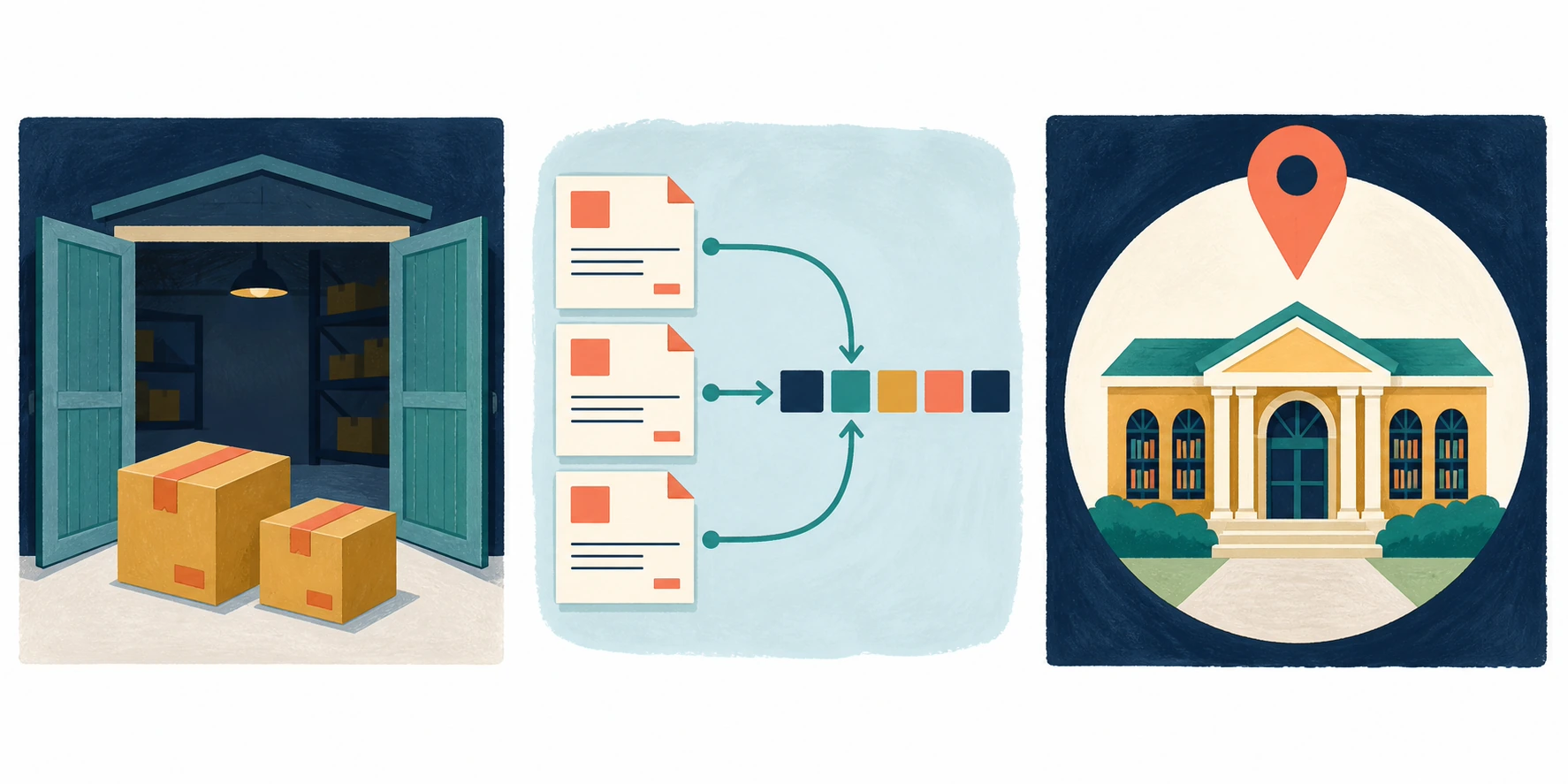
A proposed answer is “Dos paquetes, los llegaron.” for this case: “Use exactly two parcels as the new answer to ¿Qué llegó al almacén?. Choose the most neutral complete answer.”. Choose the only valid form.
A proposed answer is “Los dos paquetes llegó.” for this case: “Use exactly two parcels as the new answer to ¿Qué llegó al almacén?. Choose the most neutral complete answer.”. Choose the only valid form.
Answer available without interaction
Answer: Llegaron dos paquetes. — The whole arrival event is new, so the subject naturally follows the verb. The plural subject dos paquetes requires llegaron.
The whole arrival event is new, so the subject naturally follows the verb. The plural subject dos paquetes requires llegaron.
Answer: Llegaron dos paquetes. — The whole arrival event is new, so the subject naturally follows the verb. The plural subject dos paquetes requires llegaron.
The whole arrival event is new, so the subject naturally follows the verb. The plural subject dos paquetes requires llegaron.
Check objective 2Another case
A proposed answer is “la” for this case: “Use exactly three feminine plural invoices as the fronted topic. Esas tres facturas, ya la revisó Marta.”. Choose the only valid form.
A proposed answer is “les” for this case: “Use exactly three feminine plural invoices as the fronted topic. Esas tres facturas, ya les revisó Marta.”. Choose the only valid form.
Answer available without interaction
Answer: las — The fronted direct object is feminine plural, so the clause must resume it with las. Marta remains the postverbal subject.
The fronted direct object is feminine plural, so the clause must resume it with las. Marta remains the postverbal subject.
Answer: las — The fronted direct object is feminine plural, so the clause must resume it with las. Marta remains the postverbal subject.
The fronted direct object is feminine plural, so the clause must resume it with las. Marta remains the postverbal subject.
Check objective 3Another case
A proposed answer is “quien” for this case: “Use the highlighted library location. Fue en la biblioteca quien encontramos el documento.”. Choose the only valid form.
A proposed answer is “cuando” for this case: “Use the highlighted library location. Fue en la biblioteca cuando encontramos el documento.”. Choose the only valid form.
Answer available without interaction
Answer: donde — The cleft focuses a place, so the relative element is donde: Fue en la biblioteca donde....
The cleft focuses a place, so the relative element is donde: Fue en la biblioteca donde....
Answer: donde — The cleft focuses a place, so the relative element is donde: Fue en la biblioteca donde....
The cleft focuses a place, so the relative element is donde: Fue en la biblioteca donde....
What your own language pushes you to say
Wrong Ese informe, ya revisó Marta.
Right Ese informe, ya lo revisó Marta.
The fronted direct object is resumed by the matching clitic lo inside the clause.
Challenge: apply every rule
Solve every case and justify each choice: 1) A proposed answer is “Dos paquetes, los llegaron.” for this case: “Use exactly two parcels as the new answer to ¿Qué llegó al almacén?. Choose the most neutral complete answer.”. Choose the only valid form. 2) A proposed answer is “Llegaron dos paquetes.” for this case: “Use exactly three feminine plural invoices as the fronted topic. Esas tres facturas, ya Llegaron dos paquetes. revisó Marta.”. Choose the only valid form. 3) A proposed answer is “quien” for this case: “Use the highlighted library location. Fue en la biblioteca quien encontramos el documento.”. Choose the only valid form.
Answer available without interaction
- Place a subject after the verb when it supplies the requested or newly introduced information.
- Resume a fronted direct or indirect object with the required unstressed pronoun.
- Build cleft structures that focus a person, place, time or element.
Answer: Llegaron dos paquetes. · las · donde
The whole arrival event is new, so the subject naturally follows the verb. The plural subject dos paquetes requires llegaron. The fronted direct object is feminine plural, so the clause must resume it with las. Marta remains the postverbal subject. The cleft focuses a place, so the relative element is donde: Fue en la biblioteca donde....
Curriculum alignment and sources
- B2 discourse organisation includes highlighting significance and producing coherent connected text; the explicit information-structure sequence is editorial. · CEFR descriptors search
- The B2 inventory explicitly covers postverbal new-information subjects, focalising clefts and fronted direct objects with obligatory clitic resumption. · ic-pcic-pragmatics-b1-b2