

2.º semestre · Pensamiento Matemático II · MCCEMS 2025Ruta de edumaterial
Qué vas a aprender
- Relacionar propósito, referentes y condiciones del caso.
- Redactar o revisar un mensaje sin inventar datos.
- Descartar una lectura rival mediante evidencia.
Antes de empezar
- Comprender enunciados breves A1 con apoyo docente y el vocabulario del caso.
Ropa, clima y lugar
Describe el clima del lugar y momento indicados: It is raining here no habla de toda la región. Relaciona ropa y tarea: una caminata bajo lluvia puede necesitar impermeable; una sala caliente plantea otro contexto. Have indica disponer de una prenda; is wearing indica llevarla puesta ahora. Vestuario de teatro no es prueba del clima real.
Aplicar la relación
Fija lugar y momento. Relaciona clima y actividad. Distingue tener, sostener y vestir.
Antes de responder
- Fija lugar y momento. Relaciona clima y actividad. Distingue tener, sostener y vestir.
Un caso resuelto distinto
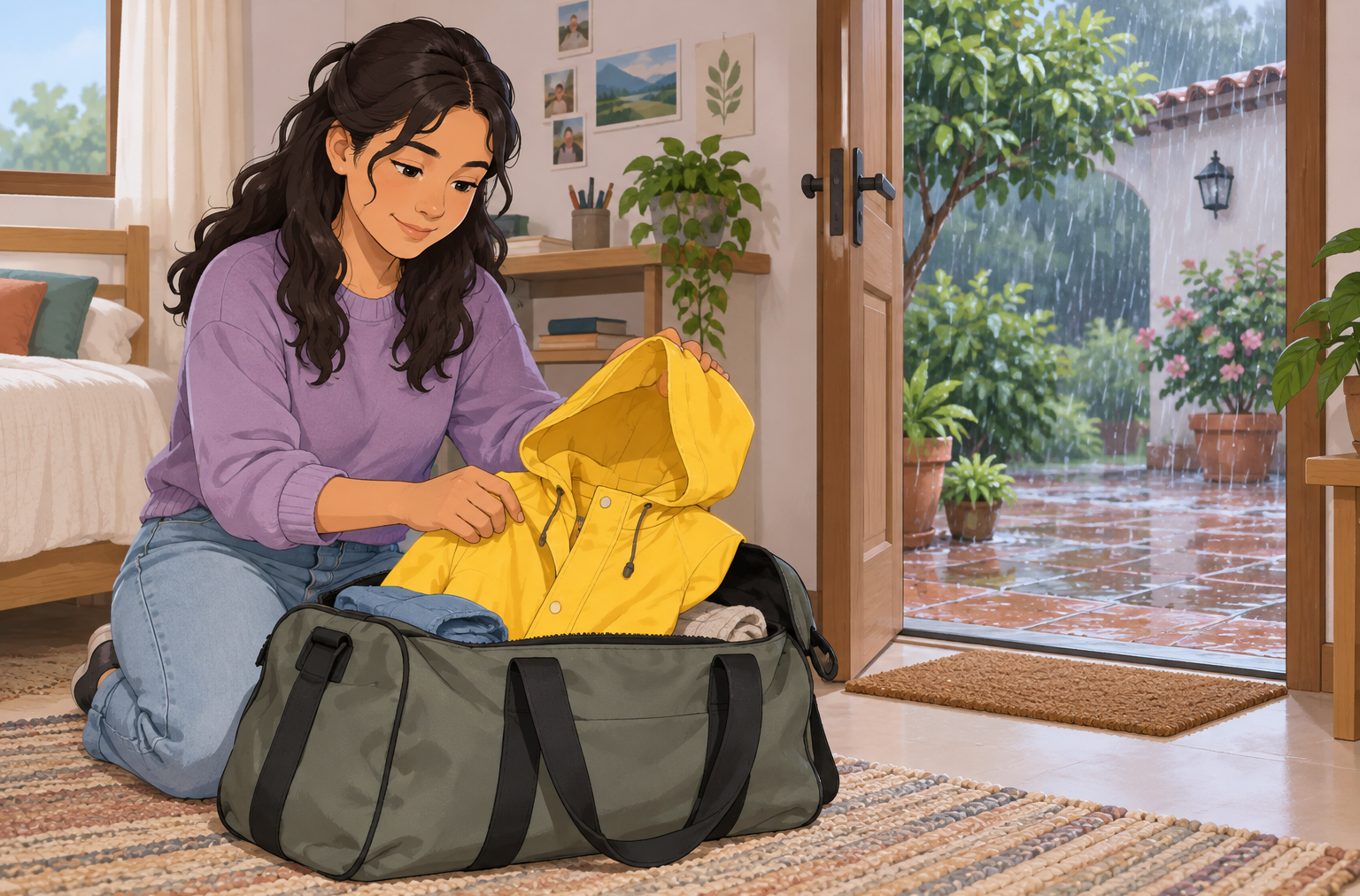
It is raining in the yard. The learner has a raincoat in a bag. The learner is still inside.
- Fija lugar y momento. Relaciona clima y actividad. Distingue tener, sostener y vestir.
The learner can put on the raincoat before going out.
El salto que cambia el sentido
Having a raincoat in the bag means wearing it now.
The learner can put on the raincoat before going out.
Fija lugar y momento. Relaciona clima y actividad. Distingue tener, sostener y vestir. Caso: «It is raining in the yard. The learner has a raincoat in a bag. The learner is still inside.».
- Fija lugar y momento. Relaciona clima y actividad. Distingue tener, sostener y vestir.
Revisa el razonamientoPrueba otro caso
It is cold outside. The lesson is indoors in a warm room. The question asks about the outdoor walk to school.
A visitor holds a wet umbrella indoors. No weather report is given. The visit is today.
Solución accesible sin interacción
Respuesta: The warm room answers the clothing need for the walk. → Use the cold outside for the walk’s clothing check.
Conserva persona, lugar y periodo de la evidencia; no amplía lo que afirma. Datos del caso: «It is cold outside. The lesson is indoors in a warm room. The question asks about the outdoor walk to school.». Resultado o contraste: «Use the cold outside for the walk’s clothing check.».
Respuesta: The umbrella alone establishes current rain. → Ask whether it is raining outside now.
Distingue información confirmada de información pendiente; pregunta por esta última. Datos del caso: «A visitor holds a wet umbrella indoors. No weather report is given. The visit is today.». Resultado o contraste: «Ask whether it is raining outside now.».
Construye otro mensaje
One group has coats and works indoors. Another group works outside in cold weather without coats. Write a request directed to the group that needs support. Redacta el mensaje en inglés y justifica la decisión. Se admiten paráfrasis comprensibles que satisfagan el caso y la tarea, con referentes claros y sin inventar datos o acuerdos. Después compara con el modelo; el docente valora todos los criterios. Escribir algo no acredita acierto semántico.
Solución accesible sin interacción
- Selecciona grupo por lugar y necesidad, no por recurso del otro grupo.
- Conserva los datos de «One group has coats and works indoors. Another group works outside in cold weather without coats.» y cumple la tarea «Write a request directed to the group that needs support.».
- Referentes y condiciones claros; admite paráfrasis sin información inventada.
Respuesta: Can we get warm coats for the group outside?
Criterios del caso: Selecciona grupo por lugar y necesidad, no por recurso del otro grupo. Modelo: «Can we get warm coats for the group outside?». Las paráfrasis que cumplen estos criterios son válidas.
Compruébalo ahora
The school yard is sunny. A family is in another town with no weather note. Ask about the family’s conditions. Redacta el mensaje en inglés y justifica la decisión. Se admiten paráfrasis comprensibles que satisfagan el caso y la tarea, con referentes claros y sin inventar datos o acuerdos. Después compara con el modelo; el docente valora todos los criterios. Escribir algo no acredita acierto semántico.
Ver solución explicada
- No transfiere clima entre ciudades.
- Conserva los datos de «The school yard is sunny. A family is in another town with no weather note.» y cumple la tarea «Ask about the family’s conditions.».
- Referentes y condiciones claros; admite paráfrasis sin información inventada.
Respuesta: What is the weather like there?
Criterios del caso: No transfiere clima entre ciudades. Modelo: «What is the weather like there?». Las paráfrasis que cumplen estos criterios son válidas.
A visitor has a warm coat in a bag. The walk is cold. Write a useful question before leaving. Redacta el mensaje en inglés y justifica la decisión. Se admiten paráfrasis comprensibles que satisfagan el caso y la tarea, con referentes claros y sin inventar datos o acuerdos. Después compara con el modelo; el docente valora todos los criterios. Escribir algo no acredita acierto semántico.
Ver solución explicada
- Integra necesidad y prenda disponible pero no vestida.
- Conserva los datos de «A visitor has a warm coat in a bag. The walk is cold.» y cumple la tarea «Write a useful question before leaving.».
- Referentes y condiciones claros; admite paráfrasis sin información inventada.
Respuesta: Can you put on your coat for the walk?
Criterios del caso: Integra necesidad y prenda disponible pero no vestida. Modelo: «Can you put on your coat for the walk?». Las paráfrasis que cumplen estos criterios son válidas.
A child wears a winter coat for a play in a warm room. Repair a caption describing cold weather. Redacta el mensaje en inglés y justifica la decisión. Se admiten paráfrasis comprensibles que satisfagan el caso y la tarea, con referentes claros y sin inventar datos o acuerdos. Después compara con el modelo; el docente valora todos los criterios. Escribir algo no acredita acierto semántico.
Ver solución explicada
- No deriva clima de vestuario.
- Conserva los datos de «A child wears a winter coat for a play in a warm room.» y cumple la tarea «Repair a caption describing cold weather.».
- Referentes y condiciones claros; admite paráfrasis sin información inventada.
Respuesta: The child is wearing a coat for the play.
Criterios del caso: No deriva clima de vestuario. Modelo: «The child is wearing a coat for the play.». Las paráfrasis que cumplen estos criterios son válidas.
The group’s outdoor task is hot. Only some members have water. Ask for a way to meet everyone’s need. Redacta el mensaje en inglés y justifica la decisión. Se admiten paráfrasis comprensibles que satisfagan el caso y la tarea, con referentes claros y sin inventar datos o acuerdos. Después compara con el modelo; el docente valora todos los criterios. Escribir algo no acredita acierto semántico.
Ver solución explicada
- No generaliza disponibilidad de unos al grupo.
- Conserva los datos de «The group’s outdoor task is hot. Only some members have water.» y cumple la tarea «Ask for a way to meet everyone’s need.».
- Referentes y condiciones claros; admite paráfrasis sin información inventada.
Respuesta: Can we get water for the other members?
Criterios del caso: No generaliza disponibilidad de unos al grupo. Modelo: «Can we get water for the other members?». Las paráfrasis que cumplen estos criterios son válidas.
Alineación curricular y fuentes
- Inglés II A1+, semestre 2, propósitos 4; páginas 16–17. DGB generación 2025–2028 y subsecuentes. Selección escrita parcial. · Inglés. Marco Curricular Común de la Educación Media Superior. Sistema Nacional de Bachillerato de la Nueva Escuela Mexicana. Modelo Educativo 2025
Sigue por este pasillo
Practicar esto: Describir sin confundir integrantesPracticar esto: Relacionar ropa, clima y contextoPracticar esto: Comparar con un criterio concretoPracticar esto: Distinguir propietario y usuarioPracticar esto: Revisar lo que una descripción permite afirmarDar una ruta útil y comprobar acceso