

Comparar: -er, more, the most y as… as
MCER A2
Qué vas a aprender
- Reconocer comparativos y superlativos en ejemplos breves de nivel A2.
- Aplicar comparativos y superlativos a evidencia visual explícita sin copiar un modelo resuelto.
- Justificar las tres respuestas con la regla y la evidencia visible.
La idea
En inglés, comparar es cuestión de contar sílabas: los adjetivos cortos añaden -er y los largos se ponen delante more, pero nunca las dos cosas a la vez.
Cuenta las sílabas del adjetivo. Una sílaba: se añade -er. Tall da taller, big da bigger, con la consonante doblada porque delante hay vocal corta. Tres sílabas o más: se pone more delante. More interesting, more expensive.
Las de dos sílabas dependen de cómo acaben. Si acaban en -y, la -y se convierte en -ier: happy da happier, easy da easier. Las demás suelen ir con more: more modern, more careful. Aquí hay adjetivos que admiten las dos formas y las dos suenan bien, así que no lo tomes como una frontera exacta. Y después del comparativo va than, no «that» ni «of»: My house is bigger than yours.
El superlativo funciona igual, pero con the delante y con la otra terminación: the tallest, the biggest, the happiest, the most interesting. El the casi nunca falta, porque si algo es lo más de algo, ya está identificado.
Hay cuatro irregulares que salen todos los días y hay que saberse: good da better y the best; bad da worse y the worst; far da further o farther y the furthest; y little da less y the least. Ninguno lleva -er ni more.
Y queda la forma que no compara, sino que iguala: as… as. She is as tall as her brother. En negativa dice que uno es menos: This exam isn't as difficult as the last one. Esa construcción es la que suena natural cuando quieres decir «no tanto como», y casi nadie la usa cuando debería.
Un último apunte: la trampa número uno de esta unidad no es elegir mal entre -er y more. Es ponerlos los dos.
Grado del adjetivo
| Tipo | Comparativo | Superlativo |
|---|---|---|
| short: small | smaller | the smallest |
| final e: large | larger | the largest |
| short vowel: big | bigger | the biggest |
| consonant + y: easy | easier | the easiest |
| long: comfortable | more comfortable | the most comfortable |
| irregular: good | better | the best |
Igualdad
| Relación | Patrón |
|---|---|
| equal degree | as + adjective + as |
| unequal degree | not as + adjective + as |
Cómo suena
- This exercise is easier than the last one.Easy tiene dos sílabas y acaba en -y: easier, sin more.
- Your idea is more interesting than mine.Interesting es largo: more delante y el adjetivo intacto.
- She is the best student in the class.Good es irregular: better y the best. Nunca «the goodest».
- My bag isn't as heavy as yours.Igualdad en negativa: la mía pesa menos, dicho sin usar «less».
- Today is hotter than yesterday.Hot es de una sílaba con vocal corta: la -t se dobla.
Ahora tú
Dos o tres, para comprobar que lo de arriba se ha entendido.
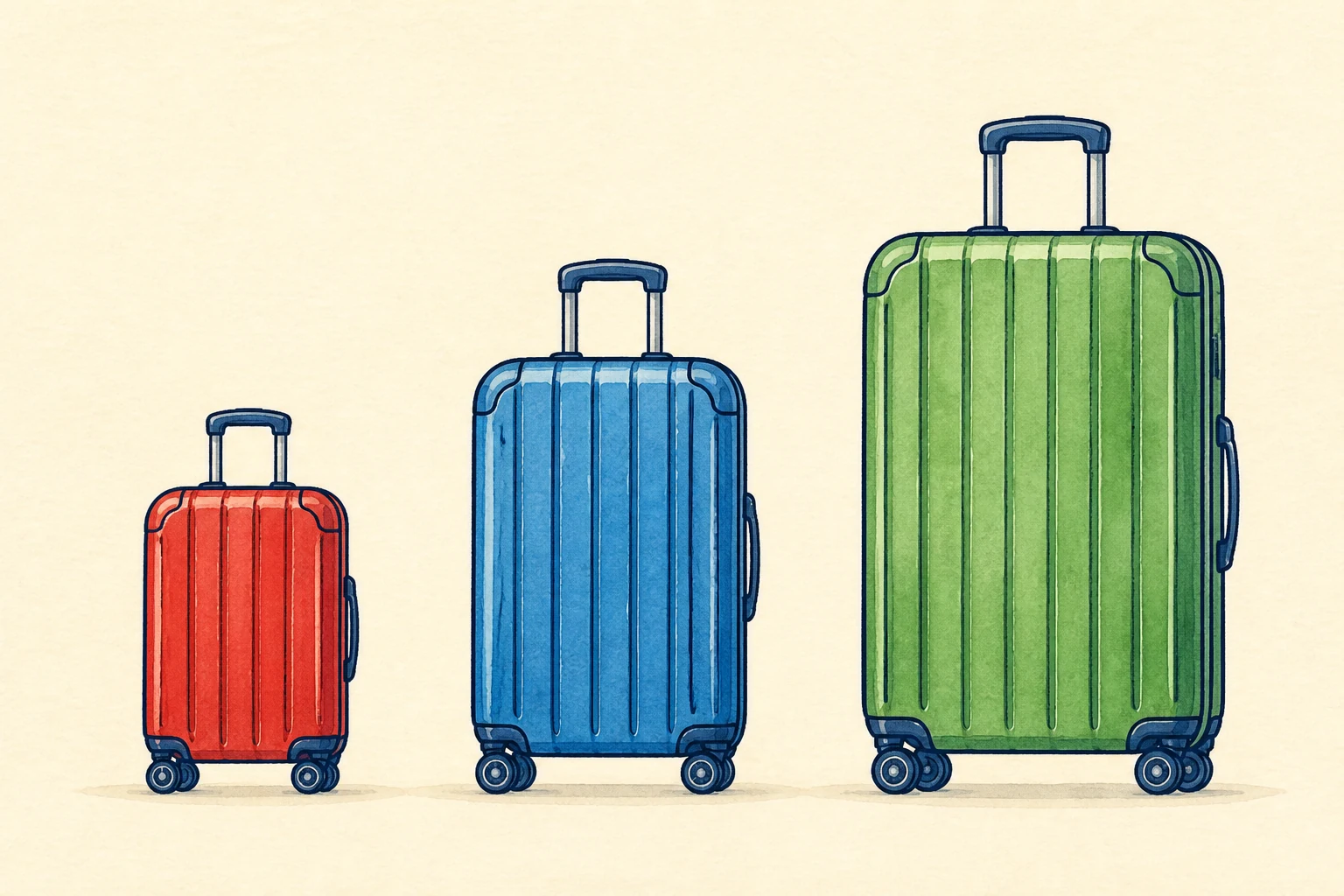
Compare only the blue and red suitcases. Choose the correct sentence.
The blue suitcase is bigger than the red one. — Se comparan dos objetos y big duplica la consonante antes de -er: bigger than.
Select the largest item from all three suitcases.
The green suitcase is the biggest. — Se elige el extremo de un grupo de tres: the + superlativo biggest.
Express the visible inequality with the as … as pattern.
The red suitcase isn't as big as the blue one. — La desigualdad con este patrón usa not as + adjetivo base + as.
Cuando no vale
Lo que rompe la regla, dicho. Esconderlo es lo que hace que te sientas engañado en el examen.
- Los cuatro irregulares no admiten ni -er ni more, y se usan a diario.good → better → the best; bad → worse → the worst
- Fun es de una sílaba pero se compara con more, no con -er.This game is more fun than that one.
- Para decir que algo va aumentando, el comparativo se repite con and.The days are getting longer and longer.
- El superlativo lleva in, no of, cuando detrás hay un sitio o un grupo.the tallest building in the world
Lo que tu idioma te empuja a decir
Se dice mal My house is more bigger than yours.
Se dice bien My house is bigger than yours.
El español compara siempre con una palabra suelta, «más», y nunca cambia la terminación del adjetivo. Por eso -er no se siente como una marca de comparación, y la mano añade more por delante para asegurarse. Es el error más repetido de todos: si ya hay -er, more sobra; si hay more, el adjetivo va entero.
Alineación curricular y fuentes
- MCER A2 · repertorio para intercambios sencillos y tareas habituales; situar comparativos y superlativos y dividir A2.1/A2.2 es una progresión editorial, no un inventario gramatical prescrito por el MCER. · Common European Framework of Reference for Languages: Companion Volume
- Descripciones específicas del inglés usadas para contrastar comparativos y superlativos; no constituyen un currículo escolar. · Reference Level Descriptions developed so far