

Confrontare: -er, more, the most e as… as
QCER A2
Che cosa imparerai
- Riconoscere comparativi e superlativi in brevi esempi di livello A2.
- Applicare comparativi e superlativi a prove visive esplicite senza copiare un modello svolto.
- Giustificare le tre risposte con la regola e la prova visibile.
L'idea
In inglese, confrontare è questione di contare le sillabe: gli aggettivi corti aggiungono -er e quelli lunghi vogliono more davanti, ma mai le due cose insieme.
Conta le sillabe dell'aggettivo. Una sillaba: si aggiunge -er. Tall dà taller, big dà bigger, con la consonante raddoppiata perché davanti c'è una vocale breve. Tre sillabe o più: si mette more davanti. More interesting, more expensive.
Quelli di due sillabe dipendono da come finiscono. Se finiscono in -y, la -y diventa -ier: happy dà happier, easy dà easier. Gli altri di solito vanno con more: more modern, more careful. Qui ci sono aggettivi che accettano entrambe le forme e suonano bene tutte e due, quindi non prenderlo come un confine esatto. E dopo il comparativo va than, non «that» e nemmeno «of»: My house is bigger than yours.
Il superlativo funziona allo stesso modo, ma con the davanti e con l'altra desinenza: the tallest, the biggest, the happiest, the most interesting. Il the non manca quasi mai, perché se una cosa è la più di qualcosa, è già identificata.
Ci sono quattro irregolari che escono ogni giorno e vanno saputi: good dà better e the best; bad dà worse e the worst; far dà further o farther e the furthest; e little dà less e the least. Nessuno prende -er né more.
Resta la forma che non confronta ma pareggia: as… as. She is as tall as her brother. Al negativo dice che uno è di meno: This exam isn't as difficult as the last one. È la costruzione che suona naturale quando vuoi dire «non tanto quanto», e quasi nessuno la usa quando dovrebbe.
Un'ultima nota: la trappola numero uno di questa unità non è scegliere male tra -er e more. È metterli tutti e due.
Grado dell'aggettivo
| Tipo | Comparativo | Superlativo |
|---|---|---|
| short: small | smaller | the smallest |
| final e: large | larger | the largest |
| short vowel: big | bigger | the biggest |
| consonant + y: easy | easier | the easiest |
| long: comfortable | more comfortable | the most comfortable |
| irregular: good | better | the best |
Uguaglianza
| Relazione | Schema |
|---|---|
| equal degree | as + adjective + as |
| unequal degree | not as + adjective + as |
Come suona
- This exercise is easier than the last one.Easy ha due sillabe e finisce in -y: easier, senza more.
- Your idea is more interesting than mine.Interesting è lungo: more davanti e l'aggettivo intatto.
- She is the best student in the class.Good è irregolare: better e the best. Mai «the goodest».
- My bag isn't as heavy as yours.Uguaglianza al negativo: la mia pesa meno, detto senza usare «less».
- Today is hotter than yesterday.Hot è di una sillaba con vocale breve: la -t raddoppia.
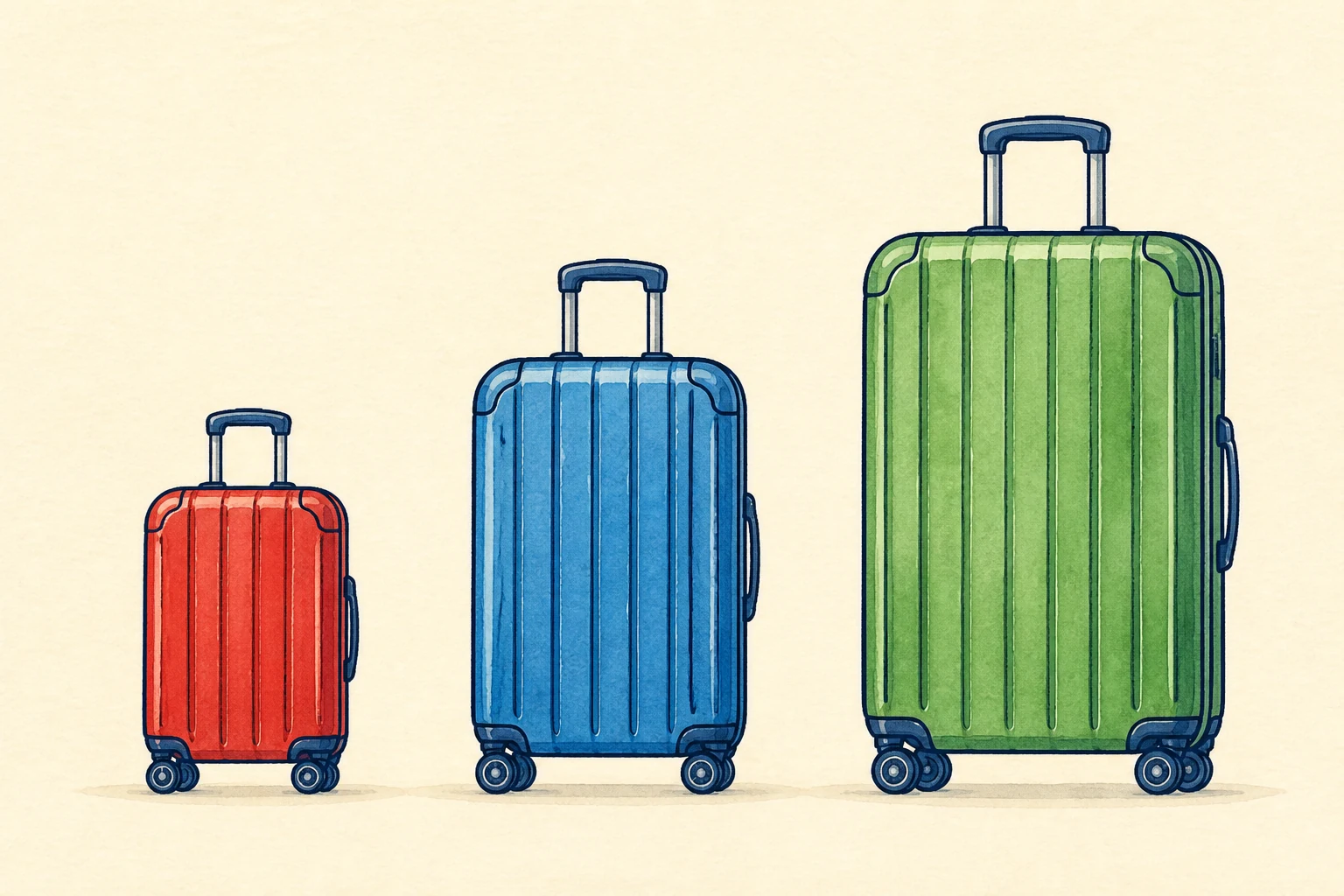
Ora tocca a te
Due o tre, per verificare che quanto sopra si sia capito.
Compare only the blue and red suitcases. Choose the correct sentence.
The blue suitcase is bigger than the red one. — Si confrontano due oggetti e big raddoppia la consonante prima di -er: bigger than.
Select the largest item from all three suitcases.
The green suitcase is the biggest. — Si sceglie l'estremo di un gruppo di tre: the + superlativo biggest.
Express the visible inequality with the as … as pattern.
The red suitcase isn't as big as the blue one. — La disuguaglianza con questo schema usa not as + aggettivo base + as.
Quando non vale
Ciò che rompe la regola, detto. Nasconderlo è ciò che ti fa sentire ingannato all'esame.
- I quattro irregolari non ammettono né -er né more, e si usano ogni giorno.good → better → the best; bad → worse → the worst
- Fun è di una sillaba ma si confronta con more, non con -er.This game is more fun than that one.
- Per dire che qualcosa aumenta, il comparativo si ripete con and.The days are getting longer and longer.
- Il superlativo vuole in, non of, quando dopo c'è un luogo o un gruppo.the tallest building in the world
Quello che la tua lingua ti spinge a dire
Si dice male She is taller of me and she is the best of the class.
Si dice bene She is taller than me and she is the best in the class.
L'italiano confronta con «più» e introduce il secondo termine con «di»: più alta di me, la migliore della classe. Tradotto di getto, quel «di» diventa of in tutte e due le frasi. In inglese il comparativo vuole than, e il superlativo di un gruppo o di un luogo vuole in.
Allineamento curricolare e fonti
- QCER A2 · repertorio per scambi semplici e compiti abituali; collocare comparativi e superlativi e dividere A2.1/A2.2 è una progressione editoriale, non un inventario grammaticale prescritto dal QCER. · Common European Framework of Reference for Languages: Companion Volume
- Descrizioni specifiche dell'inglese usate per verificare comparativi e superlativi; non costituiscono un curricolo scolastico. · Reference Level Descriptions developed so far