

Past continuous: quello che stava succedendo
QCER B1
Che cosa imparerai
- Riconoscere past continuous e azioni interrotte in contesto B1.
- Applicare past continuous e azioni interrotte a prove visive che non stampano la risposta.
- Giustificare ogni scelta con forma, significato e dato visibile.
L'idea
Il past continuous dipinge lo sfondo —quello che stava già succedendo— e il past simple ci mette l'azione che arriva e taglia.
La forma nasce dall'unire due cose che sai già: was o were, e il verbo in -ing. I was reading, they were reading. Al negativo wasn't / weren't e nella domanda was davanti: What were you doing?
A cosa serve: a dire che qualcosa era in corso in un momento del passato. Non interessa quando è cominciato né quando è finito, interessa che stava succedendo. At eight o'clock I was having dinner. Non dice a che ora ho cominciato a cenare: dice che alle otto la cena era in corso.
Di solito lo si vede accanto al past simple, e la divisione dei ruoli è sempre la stessa. Quello lungo, ciò che stava già succedendo, va al continuous; quello corto, ciò che succede di colpo, va al simple. I was walking home when I met your brother. La passeggiata veniva da prima; l'incontro è l'istante.
Lì entrano when e while, che si dividono il lavoro. While di solito accompagna il lungo: While I was cooking, the phone rang. When di solito accompagna il corto: I was cooking when the phone rang. Nota che la frase dice la stessa cosa in entrambi i modi; cambia solo quale parte apre.
Ci sono altri due usi da tenere a portata di mano. Uno, due cose lunghe insieme: While she was studying, her brother was playing the guitar. L'altro, mettere l'atmosfera all'inizio di un racconto: It was raining and nobody was talking. Per questo i racconti e i telegiornali cominciano tante volte al past continuous: montano la scena prima che succeda qualcosa.
E un avvertimento che fa risparmiare errori: i verbi di stato non si usano al continuous. Know, want, need, believe, like, own non ammettono -ing in questo senso. Non si dice I was knowing the answer, ma I knew the answer.
Was/were + -ing
| Soggetto | Affermativa | Negativa | Domanda |
|---|---|---|---|
| I | I was waiting | I was not waiting | Was I waiting? |
| you | you were waiting | you were not waiting | Were you waiting? |
| he | he was waiting | he was not waiting | Was he waiting? |
| she | she was waiting | she was not waiting | Was she waiting? |
| it | it was waiting | it was not waiting | Was it waiting? |
| we | we were waiting | we were not waiting | Were we waiting? |
| they | they were waiting | they were not waiting | Were they waiting? |
Piani del racconto
| Funzione | Forma | Esempio di schema |
|---|---|---|
| background in progress | past continuous | was painting |
| completed event | past simple | the ball hit |
| earlier completed event | past perfect | had fallen |
Come suona
- I was having a shower when the doorbell rang.La doccia veniva da prima; il campanello è il colpo che la interrompe.
- While we were waiting, it started to snow.While con quello lungo, e l'azione corta dietro. Si può dire al contrario senza cambiare senso.
- This time last year I was living in Naples.Un momento del passato e qualcosa che in quel momento era in corso.
- The sun was setting and the streets were emptying.Due sfondi insieme: è così che parte un racconto prima che succeda qualcosa.
Ora tocca a te
Due o tre, per verificare che quanto sopra si sia capito.
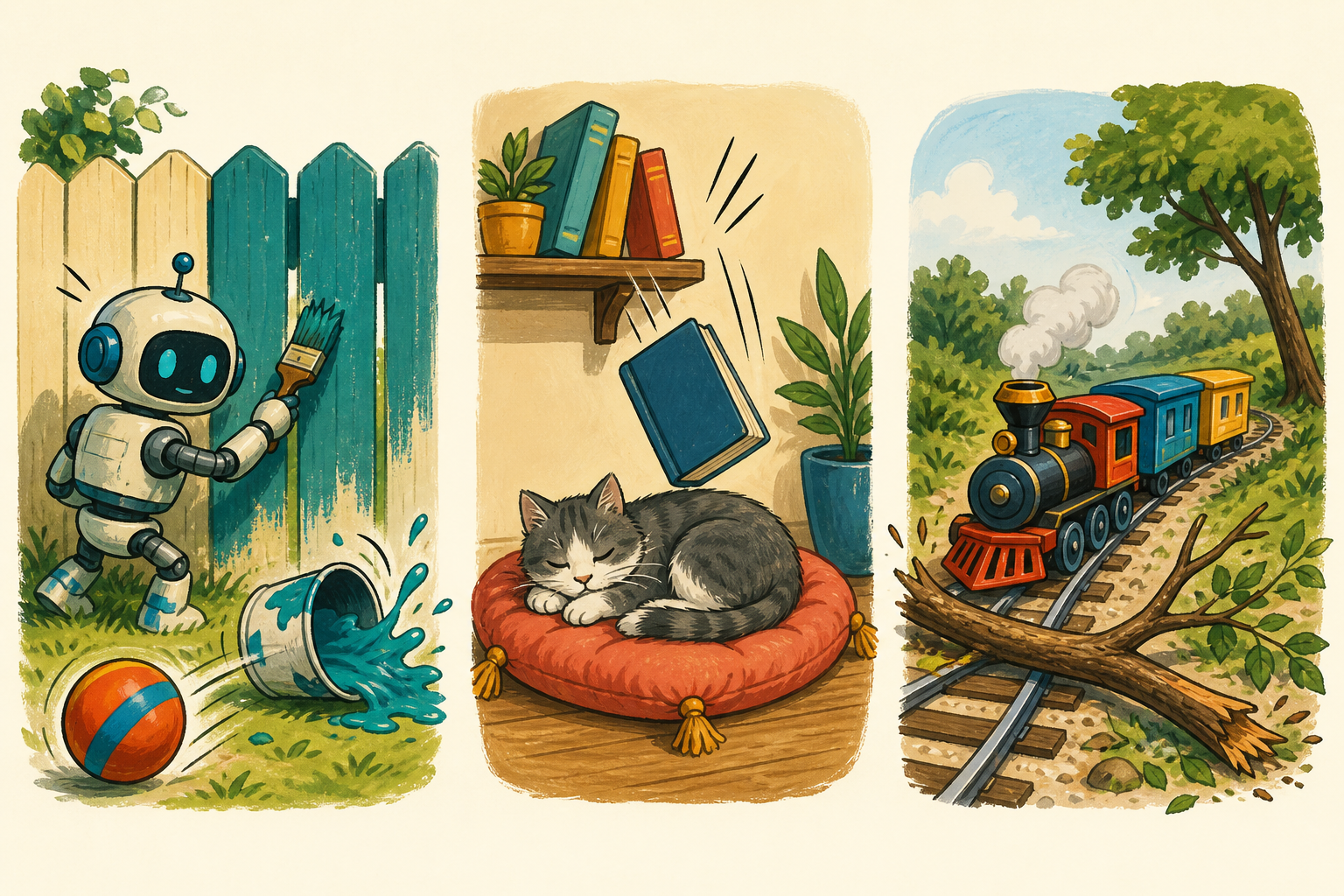
In the left panel, the ball knocked over the bucket during the activity. Complete: The robot ___ the fence when the ball hit the bucket.
was painting — La pittura era già in corso; l'urto della palla entra come evento semplice.
In the centre panel, complete: The cat ___ when the book fell.
was sleeping — Dormire forma lo sfondo in corso dentro cui cade il libro.
In the right panel, choose the clause that presents the train as already in motion when the branch fell.
The train was moving — Was moving apre una vista dentro del movimento già in corso.
Quando non vale
Ciò che rompe la regola, detto. Nasconderlo è ciò che ti fa sentire ingannato all'esame.
- I verbi di stato —know, want, need, believe, like, own— non si mettono al continuous.I knew the answer. (nunca «I was knowing»)
- Con always, il past continuous non parla di durata: esprime fastidio per qualcosa di ripetuto.He was always losing his keys.
- Se le due azioni sono corte e una segue l'altra, vanno entrambe al past simple.She opened the door and went out.
Quello che la tua lingua ti spinge a dire
Si dice male Yesterday I was going to the gym and then I was going home.
Si dice bene Yesterday I went to the gym and then I went home.
L'italiano ha lo stare + gerundio ma lo usa molto meno dell'inglese, e per il passato ricorre soprattutto all'imperfetto: «andavo in palestra». Il guaio è che quell'imperfetto copre sia l'abitudine sia l'azione in corso, e traducendolo sempre con was going si finisce per raccontare una sequenza di fatti conclusi al continuous. Se stai elencando cose che hai fatto una dopo l'altra, vanno tutte al past simple.
Allineamento curricolare e fonti
- QCER B1 · repertorio sufficiente per gestire situazioni e collegare enunciati; collocare past continuous e azioni interrotte e dividere B1.1/B1.2 è una sequenza editoriale, non un inventario grammaticale prescritto dal QCER. · Common European Framework of Reference for Languages: Companion Volume
- Descrizioni di riferimento specifiche dell'inglese usate per verificare past continuous e azioni interrotte; non costituiscono un curricolo scolastico universale. · Reference Level Descriptions developed so far