

Comparar: -er, more, the most e as… as
QECR A2
O que vais aprender
- Reconhecer comparativos e superlativos em exemplos breves de nível A2.
- Aplicar comparativos e superlativos a evidência visual explícita sem copiar um modelo resolvido.
- Justificar as três respostas com a regra e a evidência visível.
A ideia
Em inglês, comparar é uma questão de contar sílabas: os adjetivos curtos acrescentam -er e os longos levam more à frente, mas nunca as duas coisas ao mesmo tempo.
Conta as sílabas do adjetivo. Uma sílaba: acrescenta-se -er. Tall dá taller, big dá bigger, com a consoante duplicada porque à frente há vogal curta. Três sílabas ou mais: põe-se more à frente. More interesting, more expensive.
Os de duas sílabas dependem de como acabam. Se acabam em -y, o -y transforma-se em -ier: happy dá happier, easy dá easier. Os restantes costumam ir com more: more modern, more careful. Aqui há adjetivos que aceitam as duas formas e as duas soam bem, portanto não tomes isto como uma fronteira exata. E depois do comparativo vem than, não «that» nem «of»: My house is bigger than yours.
O superlativo funciona igual, mas com the à frente e com a outra terminação: the tallest, the biggest, the happiest, the most interesting. O the quase nunca falta, porque se algo é o mais de alguma coisa, já está identificado.
Há quatro irregulares que saem todos os dias e é preciso saber: good dá better e the best; bad dá worse e the worst; far dá further ou farther e the furthest; e little dá less e the least. Nenhum leva -er nem more.
E falta a forma que não compara, mas iguala: as… as. She is as tall as her brother. Na negativa diz que um é menos: This exam isn't as difficult as the last one. É a construção que soa natural quando queres dizer «não tanto como», e quase ninguém a usa quando devia.
Uma última nota: a armadilha número um desta unidade não é escolher mal entre -er e more. É pôr os dois.
Grau do adjetivo
| Tipo | Comparativo | Superlativo |
|---|---|---|
| short: small | smaller | the smallest |
| final e: large | larger | the largest |
| short vowel: big | bigger | the biggest |
| consonant + y: easy | easier | the easiest |
| long: comfortable | more comfortable | the most comfortable |
| irregular: good | better | the best |
Igualdade
| Relação | Padrão |
|---|---|
| equal degree | as + adjective + as |
| unequal degree | not as + adjective + as |
Como soa
- This exercise is easier than the last one.Easy tem duas sílabas e acaba em -y: easier, sem more.
- Your idea is more interesting than mine.Interesting é longo: more à frente e o adjetivo intacto.
- She is the best student in the class.Good é irregular: better e the best. Nunca «the goodest».
- My bag isn't as heavy as yours.Igualdade na negativa: a minha pesa menos, dito sem usar «less».
- Today is hotter than yesterday.Hot é de uma sílaba com vogal curta: o -t duplica.
Agora tu
Dois ou três, para verificar que o de cima se percebeu.
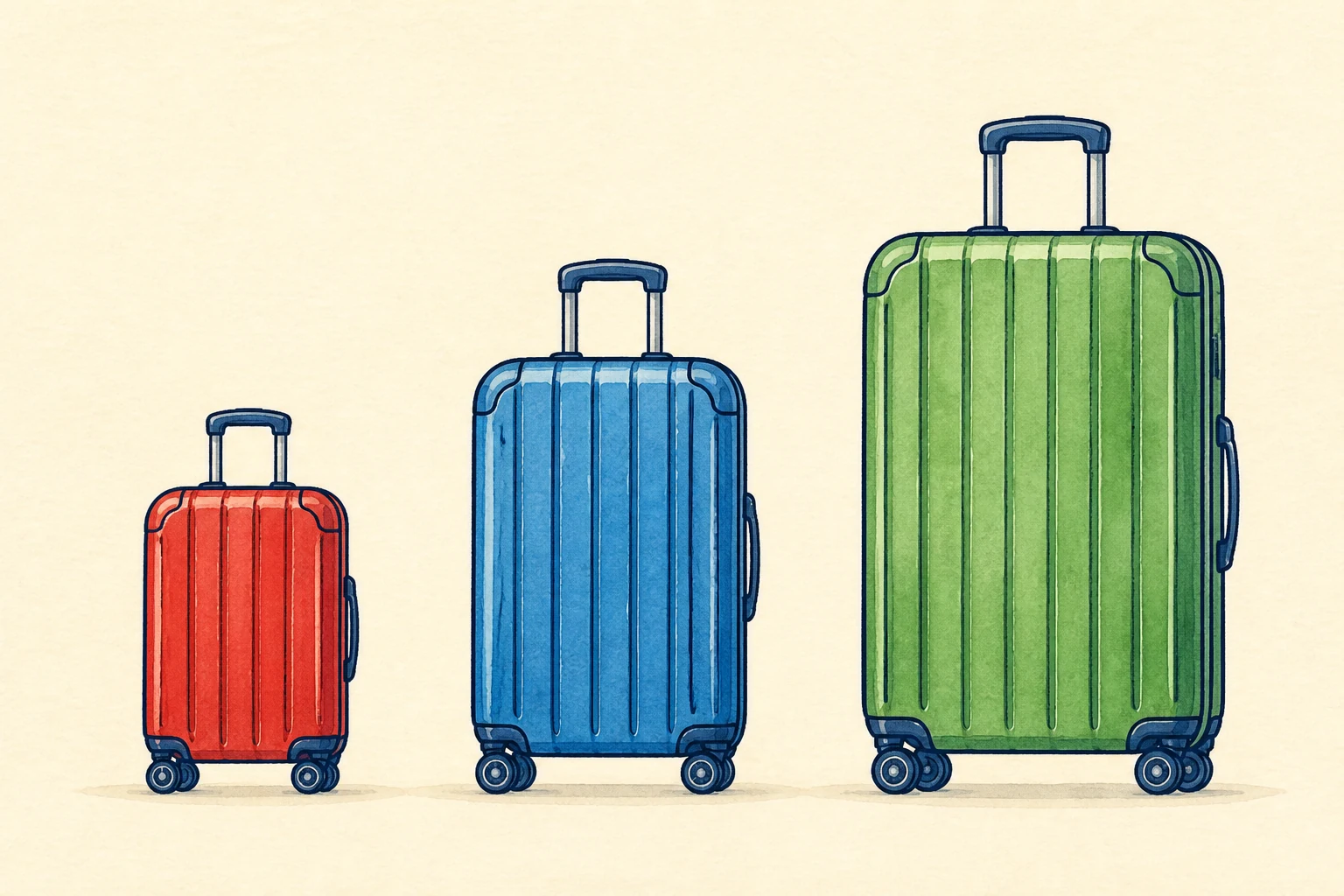
Compare only the blue and red suitcases. Choose the correct sentence.
The blue suitcase is bigger than the red one. — Comparam-se dois objetos e big duplica a consoante antes de -er: bigger than.
Select the largest item from all three suitcases.
The green suitcase is the biggest. — Escolhe-se o extremo de um grupo de três: the + superlativo biggest.
Express the visible inequality with the as … as pattern.
The red suitcase isn't as big as the blue one. — A desigualdade com este padrão usa not as + adjetivo base + as.
Quando não vale
O que quebra a regra, dito. Escondê-lo é o que faz com que te sintas enganado no exame.
- Os quatro irregulares não admitem nem -er nem more, e usam-se todos os dias.good → better → the best; bad → worse → the worst
- Fun é de uma sílaba mas compara-se com more, não com -er.This game is more fun than that one.
- Para dizer que algo vai aumentando, o comparativo repete-se com and.The days are getting longer and longer.
- O superlativo leva in, não of, quando a seguir há um sítio ou um grupo.the tallest building in the world
O que a tua língua te empurra a dizer
Diz-se mal This exercise is more easy than the other.
Diz-se bem This exercise is easier than the other.
O português também compara com uma palavra à frente, «mais», e o adjetivo fica intacto. Passa-se isso ao inglês e sai more com adjetivos que pedem -er, sobretudo os de duas sílabas terminados em -y, que são justamente os mais frequentes: easy, happy, busy, early.
Alinhamento curricular e fontes
- QECR A2 · repertório para trocas simples e tarefas habituais; situar comparativos e superlativos e dividir A2.1/A2.2 é uma progressão editorial, não um inventário gramatical prescrito pelo QECR. · Common European Framework of Reference for Languages: Companion Volume
- Descrições específicas do inglês usadas para contrastar comparativos e superlativos; não constituem um currículo escolar. · Reference Level Descriptions developed so far